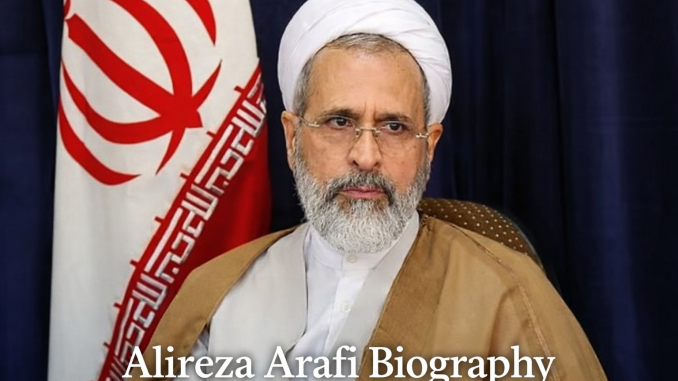
Who Is Alireza Arafi?
Ayatollah Alireza Arafi is a senior Iranian Shi’a cleric and political figure. He was born in 1959 in Meybod, Yazd Province, Iran. He comes from a religious family with deep clerical roots. From a young age, he was exposed to Islamic scholarship and religious teachings. He later moved to Qom, the center of Shi’a religious learning in Iran. There, he began advanced seminary studies. Over the years, he rose through the ranks of religious leadership.
Alireza Arafi is known for holding key positions in Iran’s religious and political institutions. He has served as Head of Iran’s Seminaries and as Friday Prayer Imam in Qom. He is also a member of the Guardian Council and the Assembly of Experts. His influence connects religious authority with state governance. Many consider him one of the important clerical figures in modern Iran.
Alireza Arafi Early Life and Background
Alireza Arafi was born in 1959 in Meybod, a historic town in Yazd Province, Iran. He was born into a religious family with strong clerical roots. His father was a respected Islamic scholar and preacher. From childhood, he was surrounded by religious discussions and Islamic teachings. His home environment was centered on faith and scholarship. This early exposure shaped his values and worldview. Religion was not just a belief in his family. It was a way of life.
As a young boy, he showed interest in religious learning. He was known to be disciplined and serious about his studies. His family encouraged him to pursue Islamic education. At a young age, he moved to Qom, the main center of Shi’a religious scholarship in Iran. Moving to Qom was an important step in his life. It placed him among leading scholars and students of Islamic theology. His early years laid the foundation for his future as a senior cleric and national religious leader.
Alireza Arafi Education and Religious Training
Alireza Arafi received his education through Iran’s traditional seminary system. After moving to Qom at a young age, he enrolled in the hawza, which is the Shi’a Islamic seminary. There, he began studying core religious subjects. His early studies included Arabic grammar, logic, and basic Islamic sciences. These subjects formed the foundation of advanced religious scholarship. He spent many years focusing on structured theological learning.
As he progressed, he studied Islamic jurisprudence, known as fiqh, and principles of jurisprudence. He also studied Islamic philosophy and Quranic interpretation. His teachers included well known senior clerics in Qom. Under their guidance, he completed advanced levels of seminary education. Through long years of study and research, he reached the rank of mujtahid. This rank allows a scholar to interpret Islamic law independently. His education prepared him for leadership roles within Iran’s religious institutions and clerical system.
Alireza Arafi Clerical Career and Leadership Roles
Alireza Arafi’s career combines religious authority with national political responsibility. Over the years, he has held some of the most influential positions in Iran’s clerical system. His leadership roles place him at the center of religious education, policy influence, and state governance. His work reflects the structure of the Islamic Republic, where senior clerics often serve in both spiritual and constitutional institutions.
Religious and Educational Leadership
In 2008, Arafi became President of Al-Mustafa International University. This university is based in Qom and focuses on training Shi’a scholars from different countries. Students from Asia, Africa, Europe, and other regions attend the institution. During his ten-year leadership, the university expanded its international outreach. It strengthened academic programs in Islamic studies, jurisprudence, and theology. His role involved curriculum oversight, global partnerships, and clerical training.
In 2015, he was appointed Friday Prayer Imam in Qom. Qom is the most important religious city in Iran. The Friday Prayer Imam position carries both spiritual and political weight. Friday sermons often address religious guidance, national policy, and social issues. Delivering sermons in Qom places him among Iran’s top clerical voices.
In 2016, he was appointed Head of Iran’s Seminaries, also known as the hawzas. This role gives him oversight of clerical education across the country. He supervises training standards, curriculum development, and institutional reforms. The position influences how future clerics are educated and prepared for leadership. It is one of the highest religious education roles in Iran.
Political and Institutional Positions
In 2019, Arafi was appointed to the Guardian Council as a clerical member. The Guardian Council is a powerful constitutional body. It reviews legislation passed by Parliament. It determines whether laws align with Islamic principles and the constitution. It also vets candidates running for major political offices. Membership in this council places him directly within Iran’s legal and political framework.
In 2022, he was elected to the Assembly of Experts. This body is composed of senior clerics. It has the constitutional authority to select, supervise, and if necessary, dismiss the Supreme Leader. Being elected to this assembly shows recognition of his senior religious status.
In 2026, he became a member of Iran’s Interim Leadership Council. This council was formed to carry out the duties of the Supreme Leader during a transitional period. The council includes senior state officials and clerical figures. His inclusion reflects institutional trust and seniority within the clerical establishment.
Through these roles, Arafi has built a career that connects seminary leadership, national oversight, and constitutional authority. His positions place him among the influential clerics shaping both religious scholarship and governance in Iran.
Alireza Arafi Role as a Muslim Cleric and Scholar
As a Twelver Shi’a cleric, Alireza Arafi operates within the dominant branch of Shi’a Islam practiced in Iran. Twelver Shi’ism believes in a line of twelve Imams as spiritual and political successors to the Prophet Muhammad. This theological framework shapes Iran’s religious institutions and governance structure. Arafi’s scholarship is grounded in this tradition. His authority comes from years of advanced seminary study and recognition by senior scholars.
One of his core roles is religious teaching. He delivers lectures on Islamic jurisprudence, ethics, and theology. Jurisprudence, known as fiqh, focuses on interpreting Islamic law for modern society. As a mujtahid, he has the scholarly rank to derive legal opinions based on Islamic sources. This position gives him intellectual influence within clerical circles.
He also plays a major role in shaping seminary curricula. As Head of Iran’s Seminaries, he oversees how future clerics are trained. This includes approving textbooks, supervising instructors, and modernizing educational structures. His decisions influence thousands of students preparing for religious leadership.
In addition, he leads important religious rituals. As Friday Prayer Imam in Qom, he delivers sermons that combine spiritual guidance with commentary on social and political matters. Friday sermons in Iran often reflect national priorities and religious interpretation of current events.
He also helps guide how clerics participate in state institutions. Iran’s system blends religion and governance. Senior clerics often serve in constitutional bodies. Arafi’s experience in both seminaries and national councils allows him to bridge theology and state policy. His fluency in Islamic legal philosophy has earned him respect among conservative religious scholars and institutional leaders.
Alireza Arafi Legacy and Influence
Alireza Arafi’s life reflects the close connection between religion and governance in Iran. From his early religious upbringing in Meybod to his rise in Qom’s seminaries, he built a career grounded in Islamic scholarship. He later moved into influential national roles, serving in key institutions such as the Guardian Council and the Assembly of Experts. His leadership in Iran’s seminary system shaped the education of future clerics. His positions in both religious and constitutional bodies strengthened his influence. Overall, his legacy is tied to clerical authority, institutional leadership, and his role in guiding Iran’s religious and political direction.
Frequently Asked Questions About Alireza Arafi
1. Who is Alireza Arafi?
Alireza Arafi is a senior Iranian Shi’a cleric and political figure. He holds key roles in Iran’s religious and constitutional institutions.
2. When was Alireza Arafi born?
He was born in 1959 in Meybod, Yazd Province, Iran.
3. What is Alireza Arafi known for?
He is known for leading Iran’s seminaries and serving in powerful bodies such as the Guardian Council and the Assembly of Experts.
4. Is Alireza Arafi a mujtahid?
Yes. He reached the rank of mujtahid after completing advanced seminary studies. This gives him authority to interpret Islamic law.
5. What role does he play in Iran’s government?
He serves as a clerical member of the Guardian Council. He is also a member of the Assembly of Experts, which oversees the selection of the Supreme Leader.
6. What is his role in Qom?
He serves as Friday Prayer Imam in Qom. This is one of the most important religious positions in Iran.
7. Has Alireza Arafi held educational leadership roles?
Yes. He served as President of Al-Mustafa International University and later became Head of Iran’s Seminaries.
8. What is his influence in Iran?
His influence comes from his leadership in religious education and his positions in major constitutional bodies. He plays a role in shaping both clerical training and national policy discussions.
Read more:
- Taiwo Adegbodu Twins Biography: Early Life, Education, Music Career, Death, Net Worth and Legacy
- Johana Ngeno Biography: Death, Early Life, Education, Political Career, Net Worth and Legacy
Be the first to comment