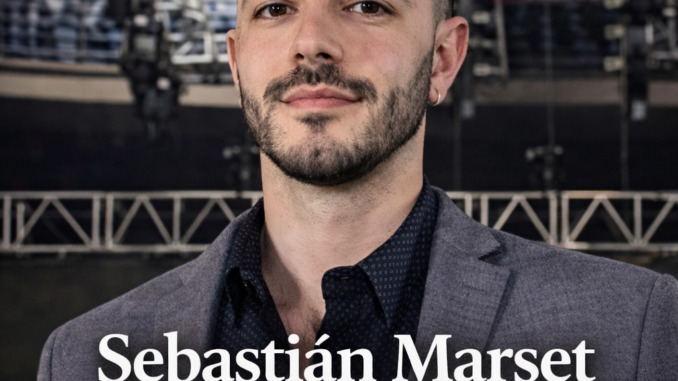
Who Is Sebastián Marset?
Sebastián Enrique Marset Cabrera is a Uruguayan national known globally as one of the most influential drug traffickers of his generation. He rose from a modest background in Montevideo to become the alleged leader of a powerful international cocaine trafficking network. As a central figure in organized crime, Marset coordinated large-scale drug shipments from South America to Europe, building a reputation for both strategic operations and a lavish, high-profile lifestyle.
Marset’s most notable achievement was the creation and expansion of a transnational criminal network that operated across countries such as Bolivia, Paraguay, Brazil, and several European nations. He was widely linked to major criminal organizations and accused of handling multi-ton cocaine shipments worth millions of dollars. A key highlight of his career was his ability to evade law enforcement for years while continuing to operate openly, even using football as a cover to launder money and maintain a public image.
He is currently trending due to his dramatic arrest in March 2026 in Bolivia after years on the run, followed by his extradition to the United States to face serious federal charges. His capture marked a major breakthrough for international law enforcement agencies and brought renewed global attention to the scale and sophistication of modern drug trafficking networks.
Sebastián Marset Early Life and Background
Sebastián Enrique Marset Cabrera was born on April 10, 1991, in Montevideo, the capital city of Uruguay. He grew up in the Piedras Blancas area, a working-class neighborhood known for its tough living conditions and limited economic opportunities. Raised in a modest household, Marset’s early life was shaped by an environment where survival often required resilience and street awareness.
Details about his immediate family remain largely private, but his upbringing reflects a background without significant wealth or privilege. As a child, he was exposed to the realities of urban hardship, which influenced his outlook from an early age. His childhood experiences were rooted in navigating a challenging social environment, where crime and informal economic activities were not uncommon.
From a young age, Marset developed an interest in football, a passion that stayed with him into adulthood. He was known to play regularly and later used the sport as part of his public image. Over time, this early interest would evolve into a strategic tool, as he became involved with football clubs, blending his personal passion with his later criminal operations.
First Arrest and Prison Years
In 2013, Sebastián Enrique Marset Cabrera was arrested in Uruguay on charges related to drug trafficking. Following his arrest, he confessed to the charges, leading to his conviction by the courts. As a result, Marset was sentenced to serve time in the Uruguayan prison system, where he remained for several years before being released around 2018.
During his time in prison, Marset became exposed to larger and more organized criminal networks. It was within this environment that he developed connections with established groups and influential figures in organized crime, including:
• Primeiro Comando da Capital (PCC)
• Regional and international drug trafficking networks
These relationships played a significant role in shaping his future, providing access to resources, contacts, and operational knowledge that would later support his expansion into larger-scale and international activities.
By the time of his release, Marset had transitioned from a small-scale trafficker into someone with broader connections and a deeper understanding of organized operations. The networks he built during this period became a foundation for his later rise, enabling him to expand beyond local activities into international drug trafficking operations.
Sebastián Marset Rise to Power
Following his release from prison, Sebastián Enrique Marset Cabrera quickly re-established himself within the international drug trafficking network, rising to prominence in a relatively short period. Leveraging the connections and experience gained during his incarceration, he became a key figure in organized operations, rapidly expanding both his reach and influence. He is widely believed to have taken on a leadership role within the Primer Cartel Uruguayo (PCU), positioning himself at the center of large-scale criminal activities and strategic decision-making.
Under his leadership, the network became heavily involved in cocaine trafficking, coordinating the movement of the drug across complex international routes. These operations typically involved:
• Sourcing from Bolivia and Paraguay
• Transporting through countries such as Brazil and other South American transit points
• Distribution into European markets, including Belgium, the Netherlands, and Portugal
The use of multiple entry points and sophisticated logistics allowed the network to operate across borders with increased efficiency and reduced risk of interception.
Authorities have stated that Marset’s network handled large-scale shipments, often involving tons of cocaine at a time. These operations were believed to generate millions of dollars in revenue, significantly boosting his financial power and influence. As a result, Marset became recognized as one of the most influential figures in the South American drug trafficking landscape, with operations extending across multiple countries and regions.
Criminal Network and Global Reach
Sebastián Enrique Marset Cabrera’s operations extended across multiple countries, reflecting a highly coordinated and international network. His activities were reported in regions such as Uruguay, Paraguay, Bolivia, Brazil, and parts of Europe, allowing him to build a system that connected production, transit, and distribution points across borders. This wide geographic reach enabled Marset to operate within different markets and jurisdictions, making his network more adaptable and increasingly difficult for authorities to track.
In addition to his own network, Marset was also linked to established criminal groups and regional organizations, which strengthened his influence. These connections included:
• Primeiro Comando da Capital (PCC)
• Italian mafia ’Ndrangheta and Paraguayan criminal clans
Such alliances provided access to resources, protection, and logistical support, helping expand operations far beyond local boundaries.
Because of his extensive reach and strategic partnerships, Marset became regarded as one of the most influential figures within the South American drug trafficking landscape. His ability to coordinate operations across multiple countries contributed to a reputation for power, organization, and global influence within the criminal network.
Lifestyle and Cover Identity
Despite being pursued by authorities, Sebastián Enrique Marset Cabrera was known for maintaining a relatively open and visible lifestyle. Rather than remaining completely hidden, he continued to move across multiple countries, often using false identities and forged documents to avoid detection. This ability to travel and operate freely contributed to his reputation for elusiveness and adaptability, allowing him to remain active for years while evading law enforcement.
One of the more unusual aspects of Marset’s lifestyle was his use of a cover identity to blend into everyday life. He presented himself as a professional footballer and businessman, which helped mask his real activities. This included:
• Claiming involvement in professional football
• Associating with and investing in football clubs
• Participating in matches and public appearances
These activities created a convincing public image, making it harder for authorities to track his movements and true identity.
According to investigators, some of these ventures were believed to serve as front operations for financial activities, including money laundering. Authorities suggested that Marset used football-related businesses and other investments as a way to move and legitimize funds generated from illegal operations. This dual identity — combining a public persona with hidden criminal activity — became a defining feature of his lifestyle and overall strategy.
Arrest and Capture
After years of evading authorities, Sebastián Enrique Marset Cabrera was finally captured on March 13, 2026, in Santa Cruz de la Sierra, Bolivia. His arrest marked the end of a prolonged international search that had involved multiple law enforcement agencies across different countries. At the time of his capture, Marset was considered one of the most wanted fugitives by agencies such as the U.S. Drug Enforcement Administration (DEA), due to his alleged role in large-scale drug trafficking and organized crime.
The arrest was carried out during a large-scale security operation, involving coordinated efforts by Bolivian authorities and international partners. Officials described the operation as carefully planned and strategically executed, leading to his successful capture without major resistance. Following the arrest, Marset was extradited to the United States, where he was handed over to face legal proceedings.
Marset now faces charges including drug trafficking and money laundering, with authorities linking him to extensive international cocaine operations involving multiple countries and large-scale shipments. Law enforcement officials described his capture as a major breakthrough in the fight against organized crime, highlighting the significance of disrupting networks associated with global drug trafficking.
Sebastián Marset Net Worth and Assets
Sebastián Enrique Marset Cabrera is believed to have accumulated significant wealth through his involvement in international drug trafficking and related financial operations. While his exact net worth is not publicly confirmed, authorities estimate that his criminal network generated millions of dollars annually, placing his overall wealth in the tens of millions of dollars range at its peak.
Investigations revealed that Marset controlled a wide range of high-value assets across multiple countries. These included luxury homes, high-end vehicles, and access to private aircraft, which were allegedly used to facilitate both his lifestyle and criminal logistics. His ability to maintain such assets while evading capture highlighted the scale and sophistication of his operations.
Authorities also identified financial activities linked to money laundering, with investments in businesses such as football clubs and other ventures believed to serve as fronts. Following his arrest, law enforcement agencies moved to seize a portion of his wealth, reportedly confiscating assets worth around $15 million. These seizures were part of broader efforts to dismantle the financial infrastructure supporting his network.
Sebastián Marset Personal Life and Family
Sebastián Enrique Marset Cabrera is married to Gianina García Troche, a Paraguayan woman who has also been linked by authorities to aspects of his financial and business activities.
The couple is reported to have three children together
Marset was known to live a luxurious lifestyle, often staying in upscale residences and moving between countries with relative ease. He reportedly enjoyed football, not only as a passion from his early life but also as a central part of his public persona. This interest allowed him to blend personal enjoyment with strategic cover, as he actively associated with football clubs and participated in matches.
Despite his criminal status, Marset often moved with his wife and children across different countries, maintaining a close-knit family structure while living under changing identities and constant relocation.
Legacy
Sebastián Enrique Marset Cabrera’s legacy is closely tied to his role in shaping modern transnational organized crime in South America. He is remembered as a figure who evolved from a small-scale trafficker into the alleged leader of a highly coordinated international cocaine network. His operations demonstrated how criminal organizations could expand beyond borders, linking production zones in South America with major distribution markets in Europe.
A defining aspect of his legacy is his ability to evade capture for years while continuing to operate openly. Through the use of false identities, strategic alliances, and unconventional cover activities such as professional football, he managed to stay ahead of law enforcement across multiple countries. This level of mobility and adaptability set him apart and contributed to his reputation as one of the most elusive drug traffickers of his time.
However, his eventual arrest in 2026 marked a turning point. Law enforcement agencies view his capture as a significant victory in the fight against global drug trafficking, highlighting the importance of international cooperation in tackling organized crime. While his activities brought wealth and influence, they also reinforced the global impact and dangers of illicit drug networks, making his legacy one defined by both power and controversy.
FAQ About Sebastián Marset
1. Who is Sebastián Marset?
Sebastián Enrique Marset Cabrera is a Uruguayan drug trafficker known for leading a large international cocaine network operating across South America and Europe.
2. How old is Sebastián Marset?
He was born on April 10, 1991, making him 34 years old as of 2026.
3. Where is Sebastián Marset from?
He is from Montevideo, Uruguay, where he was born and raised.
4. What is Sebastián Marset known for?
He is known for organizing large-scale cocaine trafficking operations and becoming one of the most wanted drug lords in South America.
5. Was Sebastián Marset arrested?
Yes. He was arrested on March 13, 2026, in Santa Cruz de la Sierra, Bolivia, after years on the run.
6. What charges is he facing?
He faces charges including drug trafficking and money laundering, linked to international criminal operations.
7. Who is Sebastián Marset’s wife?
He is married to Gianina García Troche.
8. How many children does he have?
He is reported to have three children.
9. What was his cover identity?
He posed as a professional footballer and businessman, using football-related activities as part of his public image.
10. What is his estimated net worth?
His exact net worth is unknown, but authorities believe he controlled tens of millions of dollars through his criminal network.
11. Why is he famous now?
He is trending due to his arrest in 2026, which ended a long international manhunt and marked a major breakthrough against organized crime.
Read more:
- Michael Lee King Biography: Execution, Crime, Denise Amber Lee Case, Death
- Zoey McVoy Biography: Florida Teen, Ski Accident, Injuries, Recovery, and Latest Updates
Be the first to comment