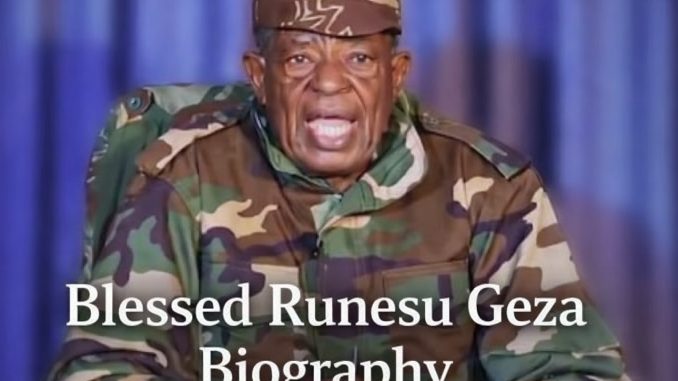
Blessed Runesu Geza, widely known by his nickname “Bombshell”, was a Zimbabwean liberation war veteran, politician, and outspoken political activist who became one of the most controversial public figures in the country’s modern political landscape. Rising from his early involvement in Zimbabwe’s liberation struggle, Geza built a reputation as a committed nationalist and long-time member of the ruling ZANU-PF party, where he served in influential political roles, including as a Member of Parliament.
In later years, however, Geza gained renewed national attention after dramatically shifting from being a party insider to becoming a fierce critic of Zimbabwe’s leadership. Through bold public statements and an active presence on social media, he positioned himself as a vocal advocate against corruption, political stagnation, and authoritarian tendencies within the government. His life story reflects both the legacy of Zimbabwe’s liberation era and the ongoing tensions shaping the country’s contemporary politics.
Blessed Runesu Geza Early Life and Background
Blessed Runesu Geza was born in 1943 in Zimbabwe, during the period when the country was still under colonial rule as Rhodesia. Growing up in a politically tense era marked by racial inequality and national resistance, Geza’s early years were shaped by the broader struggle for African self-determination that would later define Zimbabwe’s history.
He received his formal education at St. Ignatius High School, one of the country’s respected secondary institutions known for producing influential leaders. During his youth, Geza developed a strong nationalist consciousness, influenced by the growing liberation movements spreading across Southern Africa.
As political tensions intensified, he became involved in Zimbabwe’s armed liberation struggle, joining the forces aligned with ZANU and its military wing, ZANLA (Zimbabwe African National Liberation Army). His participation in the Second Chimurenga placed him among the generation of war veterans who played a central role in the fight for Zimbabwe’s independence.
Geza’s early experiences as both a student and freedom fighter laid the foundation for his later political career, shaping his identity as a nationalist figure and eventually a prominent voice within Zimbabwean public life.
Blessed Runesu Geza Political Career and Role in ZANU-PF
Following Zimbabwe’s independence in 1980, Blessed Runesu Geza transitioned from liberation struggle veteran to active participant in the country’s post-independence political system. As a committed member of the ruling Zimbabwe African National Union–Patriotic Front (ZANU-PF), Geza became part of the influential group of war veterans who helped shape the nation’s political direction in the decades after liberation.
Geza rose through the ranks of the party and went on to serve as a Member of Parliament for the Sanyati constituency in Mashonaland West. His role in government positioned him as a recognized political figure within the ruling establishment, representing both the interests of his constituency and the broader legacy of liberation-era leadership.
In addition to his parliamentary duties, Geza was also associated with the ZANU-PF Central Committee, one of the party’s key decision-making structures. His involvement at this level reflected his standing as an experienced insider with influence in internal political affairs.
For many years, Blessed Geza remained identified with the ruling party’s nationalist foundation. However, his later political journey would take a dramatic turn as he increasingly became known not only as a veteran leader, but also as one of the most outspoken critics to emerge from within ZANU-PF’s own historical ranks.
Blessed Runesu Geza Break with ZANU-PF and Rise as a Vocal Activist
In the later stages of his life, Blessed Runesu Geza became widely known not only for his liberation credentials and political experience, but also for his dramatic transformation into one of the most outspoken voices against Zimbabwe’s ruling establishment. After spending decades within ZANU-PF, Geza began to publicly distance himself from the party’s leadership, particularly under President Emmerson Mnangagwa.
Geza emerged as a fierce critic of corruption, economic decline, and what he viewed as the betrayal of the liberation struggle’s original ideals. His blunt rhetoric and fearless approach quickly earned him renewed national attention, with many supporters seeing him as a war veteran willing to confront political injustice from within the system that he once served.
Adopting the nickname “Bombshell,” Geza became increasingly active in public discourse, using modern platforms—especially social media—to broadcast his message directly to Zimbabweans. Through speeches, online commentary, and political mobilization efforts, he called for reform, accountability, and resistance against authoritarian tendencies.
His activism placed him at the center of growing political tensions, as he encouraged citizens and fellow veterans to challenge the status quo. This period marked a defining chapter in his life, transforming him from a former party insider into a symbol of dissent and political confrontation in Zimbabwe’s contemporary landscape.
Blessed Runesu Geza Controversies, State Response, and Exile
As Blessed Runesu Geza’s criticism of Zimbabwe’s leadership intensified, his political stance became increasingly polarizing. While many supporters admired his boldness and viewed him as a fearless defender of the people’s interests, others—particularly within the ruling establishment—regarded his activism as dangerous and destabilizing.
Geza’s outspoken statements, especially those directed at President Emmerson Mnangagwa’s administration, drew sharp backlash from senior political figures. His calls for mass action, protests, and national resistance placed him under growing scrutiny, and his public influence began to alarm state authorities.
Over time, the government reportedly moved to take action against him, with allegations and charges linked to incitement and threats to national security. As political pressure mounted, Geza was forced into a more precarious position, with reports indicating that he eventually left Zimbabwe and lived in exile, particularly in South Africa, to avoid arrest and continued persecution.
This period of exile marked a critical phase in his later life, highlighting the risks he faced as a former ruling-party insider turned dissident. His experience reflected the broader tensions within Zimbabwe’s political environment, where liberation-era figures could also become targets when challenging the system they once helped build.
Blessed Runesu Geza Social Media Influence and Public Image
In the final chapter of his public life, Blessed Runesu Geza became widely recognized for his ability to command attention through both traditional political activism and modern digital platforms. Unlike many figures from Zimbabwe’s liberation generation, Geza embraced social media as a powerful tool for direct communication, using it to bypass official channels and speak straight to the public.
He maintained a visible presence online, particularly on X (formerly Twitter), where he shared political commentary, addressed national issues, and mobilized supporters with passionate calls for reform. His online persona reflected the same bold and confrontational style that earned him the nickname “Bombshell.”
Through his posts, speeches, and viral messages, Geza positioned himself as a symbol of dissent from within the liberation establishment—an unusual role that drew both admiration and criticism. Supporters praised him for his courage and willingness to challenge corruption and authoritarianism, while opponents viewed his rhetoric as provocative and disruptive.
His growing influence in the digital space contributed to his lasting public image as a war veteran who transformed into a modern activist, blending liberation-era legitimacy with contemporary political resistance.
Blessed Runesu Geza Death and Legacy
Blessed Runesu Geza passed away on February 6, 2026, in South Africa, after battling serious illness. His death marked the end of a life that spanned some of the most defining eras in Zimbabwe’s history—from the liberation struggle against colonial rule to the complex political conflicts of the post-independence period.
Geza’s passing was met with mixed reactions across the political spectrum. To many supporters, he remained a heroic war veteran who refused to stay silent in the face of injustice, corruption, and declining national conditions. His transformation from a long-time ruling party figure into a vocal critic of the government made him one of the most unusual and striking political personalities of his generation.
At the same time, critics continued to view him as a divisive figure whose confrontational style stirred controversy and political instability. Yet regardless of perspective, his influence was undeniable. He represented a rare voice from within Zimbabwe’s liberation legacy willing to challenge the very system that emerged from independence.
Blessed Geza’s legacy remains deeply significant—symbolizing both the enduring power of liberation-era identity and the ongoing struggle over Zimbabwe’s political future. His life story continues to resonate as one of courage, conflict, and transformation in the nation’s modern narrative.
Conclusion
Blessed Runesu Geza lived a life deeply intertwined with Zimbabwe’s national journey, from the liberation struggle to the political complexities of the modern era. As a war veteran, former parliamentarian, and once-prominent member of ZANU-PF, he represented the generation that helped shape the foundations of independent Zimbabwe. His early commitment to the liberation cause established him as a figure of historical significance within the country’s political landscape.
In his later years, Geza’s transformation into an outspoken critic and activist made him one of the most talked-about and controversial personalities of his time. Through fearless commentary and strong public engagement, he became a symbol of dissent from within the liberation establishment itself. Whether viewed as a courageous reformist or a polarizing agitator, his life and legacy remain a striking reflection of Zimbabwe’s ongoing struggle between revolutionary ideals, political power, and the demand for accountability.
Frequently Asked Questions About Blessed Runesu Geza
1. Who was Blessed Runesu Geza?
Blessed Runesu Geza was a Zimbabwean liberation war veteran, politician, and activist.
He was known for his role in ZANU-PF and later became a strong critic of the government.
2. Why was he called “Bombshell”?
He was nicknamed “Bombshell” because of his bold and outspoken political style.
His statements often sparked national attention and controversy.
3. What was his role in the liberation struggle?
Geza took part in Zimbabwe’s Second Chimurenga liberation war.
He was aligned with ZANU and its armed wing, ZANLA.
4. Was Blessed Geza part of ZANU-PF?
Yes, he was a long-time member of the ruling ZANU-PF party.
He also served as a Member of Parliament.
5. Why did he turn against the party leadership?
In later years, Geza criticized corruption and political decline in Zimbabwe.
He became openly opposed to President Emmerson Mnangagwa’s leadership.
6. How did he use social media?
He became active on platforms like X (formerly Twitter).
He used social media to speak directly to the public and mobilize supporters.
7. Did Blessed Runesu Geza face political persecution?
Yes, his activism drew serious backlash from authorities.
He reportedly faced accusations linked to incitement and national security concerns.
8. Did Blessed Runesu Geza live in exile?
Geza was believed to have spent time outside Zimbabwe, especially in South Africa.
This was during the period of heightened political pressure.
9. When did Blessed Geza die?
He died on February 6, 2026, in South Africa.
His death followed a battle with serious illness.
10. What is his legacy?
Blessed Geza remains a deeply debated figure in Zimbabwean politics.
Supporters see him as courageous, while critics view him as divisive.
Read more:
- Musa Khawula Biography: Life, Controversy, Detention and Legal Challenges
- Brigadier Rachel Matjeng Biography: Relationship With Cat Matlala, Life, Career and Legacy
Be the first to comment