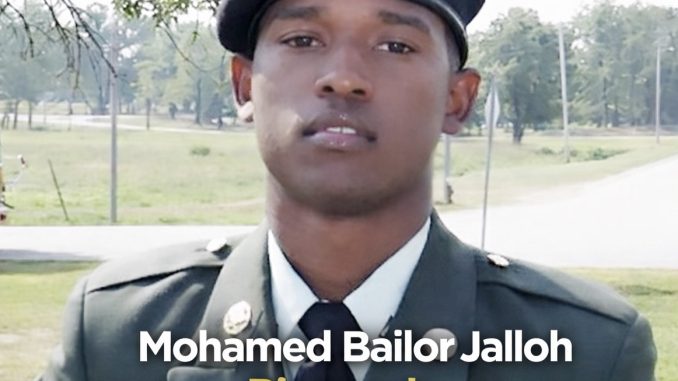
Who Is Mohamed Bailor Jalloh?
Mohamed Bailor Jalloh became widely known in 2026 after being identified as the gunman involved in a deadly shooting at Old Dominion University. The incident shocked the United States and quickly became a major national news story due to the suspect’s past connections to extremist activities and his previous conviction in a terrorism-related case.
Jalloh’s life story has drawn intense public attention because it reflects a complex and controversial journey that includes immigration to the United States, military service, radicalization allegations, imprisonment, and eventual involvement in a violent attack on a university campus. Authorities and investigators have examined his background closely to understand the circumstances that led to the tragedy.
This biography article explores the life of Mohamed Bailor Jalloh, including his early life, military service, legal history, and the events surrounding the 2026 Old Dominion University shooting that brought his name into international headlines.
Early Life and Background
Mohamed Bailor Jalloh was born in Sierra Leone, a West African country that experienced years of civil conflict in the late twentieth century. Like many people from the region seeking better opportunities and stability, he eventually immigrated to the United States.
After relocating to America, Jalloh built a life in the country and eventually became a naturalized U.S. citizen. He spent much of his adult life living in Virginia, where he worked and pursued opportunities within the military and civilian sectors.
People who knew him during his early years in the United States described him as someone who initially appeared to be integrating into American society. However, over time, investigators later discovered that he had developed ideological views that drew concern from law enforcement agencies.
The details of his personal upbringing remain relatively limited in public records, but his immigration and later military involvement would become central parts of his biography.
Military Service in the United States
One of the most surprising aspects of Mohamed Bailor Jalloh’s background is that he served in the U.S. military system before his criminal convictions.
Jalloh reportedly joined the Virginia Army National Guard around 2009. The National Guard is a component of the U.S. military that performs both domestic emergency roles and overseas deployments when activated.
During his time in the Guard, he received military training and served alongside other American soldiers. This period of his life appeared to represent a step toward stability and civic responsibility.
However, his military career did not last indefinitely. His service reportedly ended several years later, around 2016, which coincided with the time when federal investigators began looking into activities connected to extremist support.
The revelation that a former National Guard member later became involved in terrorism-related activities shocked many observers and raised serious concerns about radicalization risks within individuals who previously served in the military.
Radicalization and Federal Investigation
The turning point in Mohamed Bailor Jalloh’s life came when federal authorities began investigating his suspected involvement with extremist groups.
According to federal prosecutors, Jalloh became radicalized by propaganda associated with Islamic State of Iraq and Syria, often referred to as ISIS. Investigators said he communicated with individuals he believed were connected to the group and attempted to assist them.
Authorities alleged that Jalloh tried to provide material support for terrorism by offering help that could assist an attack or benefit the organization.
U.S. law enforcement agencies take such activities extremely seriously. Federal investigators from the Federal Bureau of Investigation launched a detailed investigation into his activities.
Eventually, the investigation led to his arrest and prosecution in federal court.
Terrorism Conviction and Prison Sentence
In 2016, Mohamed Bailor Jalloh was formally charged with attempting to provide material support to a terrorist organization.
Facing federal prosecution, Jalloh ultimately pleaded guilty to the charge. Court records indicated that he had attempted to help what he believed were ISIS-related operations.
In 2017, a federal judge sentenced him to 11 years in prison for the terrorism-related offense.
The sentence reflected the seriousness of the crime under U.S. federal law. Providing material support to a designated terrorist organization is considered a major national security offense and can carry lengthy prison sentences.
Jalloh served several years of his sentence in federal custody. During this time, he remained under the supervision of the federal prison system.
However, like many federal prisoners, he became eligible for release before serving the full term of his sentence due to legal provisions and sentencing guidelines.
Release From Prison
Mohamed Bailor Jalloh was released from prison in December 2024.
His release came after he served the majority of his sentence. Following his release, he returned to civilian life in Virginia.
Former inmates convicted of terrorism-related crimes are typically subject to monitoring or supervision after their release. However, the exact level of monitoring and restrictions applied in Jalloh’s case has not been fully detailed publicly.
After leaving prison, he remained largely out of the public spotlight until the events of 2026.
The 2026 Old Dominion University Shooting
The event that ultimately brought Mohamed Bailor Jalloh into national headlines occurred on March 12, 2026, at Old Dominion University in Norfolk, Virginia.
According to authorities, Jalloh entered a building on the university campus where a Reserve Officers’ Training Corps (ROTC) class was being held.
Witnesses reported that he opened fire during the class session. The attack caused panic inside the building and quickly prompted an emergency response.
During the incident:
- One person was killed, identified as a military science instructor.
- Two other individuals were injured during the attack.
Students and individuals inside the classroom acted quickly and managed to confront the shooter. Their actions helped prevent further casualties.
Law enforcement officers responded rapidly to the scene and secured the area shortly after the shooting.
Victims and Response
The person killed in the attack was identified as Lt. Col. Brandon Shah, an ROTC instructor and respected member of the university community.
His death prompted an outpouring of grief from students, faculty members, and military officials.
Old Dominion University temporarily suspended classes and implemented security measures while investigators worked to determine the full details of the incident.
University officials described the tragedy as one of the most difficult moments in the institution’s history.
The bravery of students who intervened during the attack was widely praised by authorities and university leaders.
Federal Investigation After the Attack
Following the shooting, federal and local law enforcement agencies launched a major investigation.
The case was examined by the Joint Terrorism Task Force, which includes investigators from the FBI and other federal agencies.
Authorities examined several key questions:
- Whether the attack was motivated by extremist ideology.
- Whether Jalloh had any accomplices.
- Whether he had renewed contact with extremist networks after his release from prison.
Because of his earlier conviction for attempting to support ISIS, investigators treated the case as a possible terrorism-related attack.
The investigation also focused on how he obtained a firearm despite his criminal history.
Public Debate and National Reaction
The shooting quickly sparked nationwide debate.
Some policymakers and analysts raised questions about whether individuals previously convicted of terrorism-related crimes should face stricter monitoring after release from prison.
Others focused on broader issues such as campus security and gun access.
The case also raised concerns about radicalization and the long-term risks associated with extremist ideology.
Public discussion surrounding the incident extended across political, security, and social spheres.
Personal Life
Very little detailed information about Mohamed Bailor Jalloh’s personal life has been made public.
He kept a relatively low profile outside of the criminal investigations that brought him to national attention.
Public records indicate he lived in Sterling, Virginia, prior to the 2026 shooting.
Aside from his military service and legal history, few details about his family background or private life have been widely reported.
Legacy and Impact
The legacy of Mohamed Bailor Jalloh is closely tied to the tragic events of the Old Dominion University shooting.
The incident had a lasting impact on the university community and contributed to broader national discussions about extremism, security, and criminal justice.
The tragedy also highlighted the risks posed by individuals who may remain influenced by extremist ideologies even after serving prison sentences.
In the years following the incident, policymakers and security experts are likely to continue examining the lessons learned from the case.
Conclusion
Mohamed Bailor Jalloh’s life story is marked by dramatic and controversial events. From immigration and military service to a federal terrorism conviction and the deadly 2026 Old Dominion University shooting, his biography reflects a complex and troubling trajectory.
The tragedy that unfolded at Old Dominion University remains a somber reminder of the consequences of extremist violence and the challenges faced by authorities in preventing such attacks.
As investigations and public discussions continue, the case of Mohamed Bailor Jalloh will likely remain part of broader conversations about security, radicalization, and public safety in the United States.
Frequently Asked Questions (FAQ) About Mohamed Bailor Jalloh
1. Who was Mohamed Bailor Jalloh?
Mohamed Bailor Jalloh was a naturalized American citizen originally from Sierra Leone who became known in 2026 after carrying out a shooting at Old Dominion University. His background included prior military service and a previous federal conviction for attempting to support an extremist organization.
2. How old was Mohamed Bailor Jalloh?
Mohamed Bailor Jalloh was 36 years old at the time of the 2026 Old Dominion University shooting.
3. Where was Mohamed Bailor Jalloh from?
He was originally from Sierra Leone but later immigrated to the United States and became a naturalized U.S. citizen.
4. Did Mohamed Bailor Jalloh serve in the U.S. military?
Yes. Jalloh previously served in the Virginia Army National Guard from around 2009 to 2016 before his arrest in a terrorism-related case.
5. Why was Mohamed Bailor Jalloh previously arrested?
He was arrested and charged in 2016 for attempting to provide material support to the extremist group Islamic State of Iraq and Syria. He later pleaded guilty to the federal charge.
6. How long was Mohamed Bailor Jalloh in prison?
He was sentenced to 11 years in federal prison in 2017 but was released in December 2024 after serving several years of his sentence.
7. What happened at Old Dominion University in 2026?
On March 12, 2026, Mohamed Bailor Jalloh carried out a shooting inside a classroom at Old Dominion University in Norfolk, Virginia, during a Reserve Officers’ Training Corps (ROTC) class. The attack resulted in one death and two injuries.
8. Who was killed in the Old Dominion University shooting?
The victim killed in the attack was Brandon Shah, a respected military science instructor at the university.
9. How was the shooter stopped?
Students and individuals inside the classroom reportedly confronted and subdued the attacker, which helped prevent additional casualties before authorities secured the scene.
10. Is the attack being investigated as terrorism?
Yes. Because of Jalloh’s previous conviction related to ISIS support, the Federal Bureau of Investigation and the Joint Terrorism Task Force investigated the incident as a possible terrorism-related attack.
11. Where did Mohamed Bailor Jalloh live before the attack?
Before the 2026 incident, Jalloh reportedly lived in Sterling.
12. Why did the Old Dominion University shooting receive national attention?
The attack received significant media attention because the suspect had previously been convicted in a terrorism case and had served in the U.S. military before committing the crime.
Read more:
- William McCasland Biography: Retired U.S. Air Force Major General, Career, Education, and Recent News
- Caitlin Clark Biography: Age, Early Life, College Career, WNBA Career, Net Worth, and Legacy
Be the first to comment